Tag Archives: love

When Life Takes Many Unexpected Turns

Children are dreamers. They have a mind filled with ideas and a huge imagination to go along with it. They grow up wanting to have and be so many different things. They go from wanting to be a teacher, to a doctor, to a firefighter, and everything else under the sun all in one day. Being a young child, makes all these things seem well within reach. But as a child one thing we often don’t consider, is the unexpectedness of life that gets in the way of the future playing out exactly as we imagined.

When I was 24 years old my father passed away from stage 4 cancer. The doctor told us he had 2 months to live a few days after Thanksgiving. This came as a surprise not only because it was right after the holiday, but because my father had been living with cancer for years and it seemed to be under control. Learning that my father was dying, was tough to deal with because my relationship with my father was quite special and I was still very young. I had never imagined my father dying in my 20’s and in my mind we still had so much more life to live together.

My father and I were deeply connected. He was the person I was more connected to than anyone else in life. As a child I remember walking by his room and thinking of how good he was to me and that alone brought me to tears. He was the person who I always relied on during my most painful moments and he prayed for me through my troubles. I always remember the power behind his prayers, as it was always so moving yet calming, and inspired me to have faith. My father was also my sole parent from age 9 to 17, so for much of my childhood it was just him and I.

The year he passed away was also the same year I was planning on getting my bachelors degree and beginning my career. At the time I was not sure what I wanted to do in life, just that I deeply wanted to help people in some way, which was a passion I got from my father. The weeks before my father’s imminent passing, I recall thinking (amongst many other things) dang, my dad won’t see me graduate college? Which to me was yet another experience that I would not have in this lifetime.

At this point I had gotten used to life’s disappointments (or so I thought) but they still hurt.

Along with my father not seeing me graduate, I thought of everything else he and I wouldn’t be able to experience due to his passing. He would miss out on seeing me getting married, he would miss out on meeting and grandfathering my children, and he wouldn’t see my future success. Growing up I had already missed out on many common childhood experiences in part because I did not have a mother around. I didn’t get the mother daughter connection, the mother daughter conversations, and even the mother daughter quarrels. 

Not growing up with a mother was unexpected and difficult to come to terms with, yet I had in mind that because of this early childhood hardship, life wouldn’t throw me many more curveballs. I figured it should be smooth sailing from here on out. This idea came from the innocent belief that life was somewhat fair, so if you had a hard childhood, you’d have an easier adulthood.

But I learned early on that this was not always the case. Life isn’t always somewhat fair even if you’ve had plenty of hardships. As a teenager that had proven to be true, but I had yet to truly figure that out, or perhaps truly accept it. The hopefulness that children have for life, still dwelled within me.

Having this mind and spirit that was full of possibilities and opportunities, meant that I had a lot of ideas for the future in mind. I was going to get everything I wanted, just the way I wanted. There was no other way.

So one day at 17 years old, I was sitting down on my bedroom floor, thinking just that. The tv was on but I wasn’t really paying attention. I was too caught up daydreaming. I had just returned from school, and was engaging in my day to day routine of sitting alone on my bedroom floor, imagining my future the way I wanted it, as I often did. At this age, I loved to listen to music and daydream. It was a form of escape. If I couldn’t have everything I wanted in the real world, at least I could have it in my daydreams.

On this particular day, I was thinking about my wedding. I imagined myself walking down the aisle in my white dress, and thinking of all the people that would be there watching me. My future husband of course. My dad especially, but not my mother. This was the time in my life, when I didn’t really have a relationship with my mother. So I imagined she wouldn’t be there. My daydreaming at this age was more realistic and mature, so I took into consideration the things I didn’t have. My mother not being at my wedding was a missing piece of my life, I had come to accept. My father being at my wedding seemed like a given at that time though. Of course he would be there, because why wouldn’t he be? He’s always there.

My lack of understanding or accepting the unexpectedness of life, lead me to believe that without a doubt my father would be at my wedding. Little did I know, my father unfortunately wouldn’t make it to meet a future boyfriend, let alone attend my wedding day. This was something that was very unexpected for me, as I had never imagined my early adulthood starting out like this.

Being so young and already having experienced so many ups and downs in life, began to make me feel unsettled, as I never knew what was coming next. I also dealt with the questions centered around why. Why is this is happening to me? Why does it seem like all of these hard things are happening to me, but not other people around me? Why isn’t it fair?

I know there are many people that find themselves in similar situations to mine and ask themselves similar questions. There are times in life, when not only do one or two big unexpected events happen, but it seems like they don’t stop happening. It’s one after the other, and it completely changes the vision you have for your future.

So as I reflect on all of the unexpected happenings in my life, I think of the many others who find themselves in a similar place. I think of the others in my life such as my family members and friends, who had an idea in mind for their future but it turned out much different than they expected.

Whether it was a career that did not go as planned, the loss of family members, or children who went astray, there are many people dealing with the unexpected events of life. Realizing it’s not just me, makes me feel less alone within my experience, but it also inspires me to see my life in a different way and guide others through their own experiences. 

In these situations, there are different paths a person can take. I do not have the perfect solution or all the best answers for exactly how one should react, and what they should do. But I can offer insight based on my own learnings in dealing with the unexpected.

First and foremost I have learned, to always remember you have a choice in how you proceed in life. You can allow what happened to you in your life, to stop you in your tracks. No more happiness. No more joy. Just existing. It’s important to remember that this is not something that happens on its own, but it’s something you choose to do. This could mean staying in a dissatisfying career, or deciding not to fulfill your dreams for life. It could also look like staying in the same place (physically, emotionally or mentally) for years despite feeling like you should no longer be there. This is an option that won’t move you forward.

At different points in my life I chose to take the option that would not move me forward because I was so taken aback and frustrated by the many unexpected turns my life had taken. It seemed like I could not catch a break. I justified going down that path because it seemed like nothing was going the way I imagined. I never imagined that I would grow up without a mom for a large portion of my childhood, and I never thought the man who raised me as a single father would die when I was 24. All of these things (and more) led me to give up on life’s possibilities.

But there was a turning point in my life. There was a moment I realized that there was still so much for me to do in this life. I was still alive, young, and there was so much of life I hadn’t experienced yet. Why would I rob myself of those experiences? I was still here for a reason and a purpose. This change in thinking, encouraged me to change paths, which meant making a different choice. I made a choice that I would still have a great life because I realized I deserved it. I thought about the young child I once was, and everything she wanted out of life and I realized that I could still give myself those things, and I should give myself those things. Even if this life was not the exact life I wanted or expected as a kid, it didn’t mean it wasn’t worth it. 

The latter option I chose, is an option anyone can choose. This is the option that moves you forward. This option means keeping your heart open to all of the possibilities life still has to offer. It means accepting what has happened to you in life and the fact that there will be certain things you won’t experience because of those happenings. You may never get to see your father at your wedding. Or have a relationship with your mother. These types of circumstances are all very difficult parts of life that are hard to come to terms with and may likely take time to fully accept. But the key is understanding that you can make peace with not having these things.

Making peace with not having certain things, doesn’t mean you won’t miss the people or the things you don’t have. But you accept it and allow yourself to still feel joy, contentment, happiness, and peace regardless of what is missing in your life. So in the end, you still choose to pursue the career you’ve always wanted, have children, explore the world, and do whatever else you desire.

You don’t have to allow the many unexpected curveballs in life to stop you from achieving, even when it seems like those curveballs are being thrown back to back. You should make the most out of the life you have and in the process of doing that, never forget the child you were. Remember those innocent ideas, the big imagination and the hopefulness. Remember the happiness and the joy you always wanted, and give yourself that.

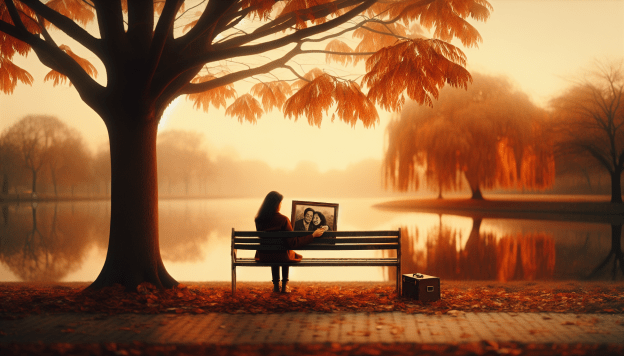
Motherless Daughters

There is no one way to be a motherless daughter. It is an experience based on how a woman or a girl perceives her relationship with her mother. Some women and girls may consider themselves motherless if they didn’t grow up with their mother. For others, it could be because they have a complicated or unhealthy relationship with theirs. And for still others, it’s because their mother passed away.

Being a motherless daughter for any reason, and for any period of time, is an interesting experience. I use the word interesting because of the significant impact being a motherless daughter can have on someone’s life. To fully understand the unique experience of motherless daughters, you have to take into account the experience of being a woman and a girl in this world, as that is a unique experience in and of itself.

The way you grow up as a girl, the way you’re seen and treated, is different from boys and men. People perceive you in many false ways and being weaker is one of them. Not only may they perceive you as weaker but they may treat you as such. You may often hear people saying things like “you won’t be good at that because you’re a girl” or something similar to that. These types of false perceptions and unfair ways of being treated cause many girls to struggle with realizing their full potential. 

Women and girls not only deal with false perceptions but they face more pressure to look and act in particular ways. People tend to have this idea that girls should always look polished and behave perfectly. There’s very little room for mistakes in a girl’s world. Growing up without a woman to guide you through these experiences can heighten them and make you feel alone within them.

Having been a motherless daughter for a period of time, I have quite a few experiences that came about in part from not having a mother around. In particular, I recall growing up and always feeling like I had to have my hair done. I never felt like I could go to school without it in a style. Growing up as a Black girl in the early 2000’s meant you could not leave the house without either straight hair, a weave, or braids. Wearing your natural coils was not considered a suitable style. Not having a mother to pour into me and make me feel beautiful with my coily hair regardless of society’s pressure and ideals made it more difficult for me to be happy with my hair.

For many girls, their mother not only pours into them to block out the world’s perceptions and pressures but she is their primary source of leadership. Someone is treating you differently because you’re a girl? She’s there, she’ll tell you just how to handle it. You’re confused about how to deal with puberty? She’s there and she’s been through it, she’ll help you figure it out. You need someone to do your hair or teach you how to do it? She’s there, she’ll do it and teach you during the process. 

So when a girl has to navigate this world without a mother, how do they do it? Who do motherless daughters look up to? Who do they look to when they are discriminated against? Who do they look to in order to tell them how they should look after themselves and handle things like periods and hormonal changes?

In my experience, I had to navigate these situations somewhat alone. Even though I had an older sister (who I cannot forget and am forever grateful for) it was still hard. My older sister helped guide me through life as a girl but she was my sister and was learning life on her own as well. She was not my mother so she could not be everything I needed, nor should she have been because that was not her role.

So being somewhat alone in these types of situations lead to wishful thinking and many awkward experiences. For instance, I would imagine how nice it would be to have a mother who I could try out different hairstyles with, or who could do my hair last minute if I needed it. But that was not my reality. Not having a mother who could do my hair meant every other weekend going to a hairstylist to get my hair done. Instead of having someone do my hair who I felt close with and trusted, I was sometimes in uncomfortable places with people I didn’t know.

There were also instances when I really just wanted a mother’s love, attention, and affection. I just wanted a mother who I could go to and tell her about my days at school, who I could go to for advice, and receive their love during difficult moments.

So it’s the little experiences and big experiences that stick out to you when you don’t have a mother. All the things that could be but aren’t. 

These perceptions, pressures, and the lack of guidance and help from a mother are only some of the many difficulties and complexities that come about from being a motherless daughter. These issues are things that people with mothers may never even think about because the alternative doesn’t occur to them. As a result, the hardships motherless daughters face are unknown by many with mothers.

So to offer support, I encourage people to consider the motherless daughters around them. Consider the young girl who only lives with her father. Consider the girls and women who do not have good relationships with their mother. And consider the girl or woman who lost hers. 

Think of the ways you can give your love and time to them. It could be based on something you’ve gone through yourself or a skill you have. It could look like teaching them how to deal with the changes of growing up or how to do their own hair. Or it could be guiding them through the perceptions and pressures they face growing up as a girl and being a woman in this world. 

And even if you feel like you have nothing to offer, it doesn’t mean you can’t support them. You’d be surprised at the ways motherless daughters are looking for support that you may be able to provide. You should not hesitate to ask them how you can support them so they can receive help in the ways they need.

Whatever you can do, you should do, because for many girls and women it would mean the world to have someone help fill in the pieces they are missing without having a mother around.

For my dear readers who are motherless daughters, what is something you would like people to know about your experience, and in what ways can people best give their support? 

And to my curious readers who came across this article to learn more about motherless daughters and ways to offer support: I appreciate your time and consideration to be willing to learn about an experience unfamiliar to your own. It is people like you who seek to understand and support those with different experiences from their own who make a difference in our world. So I thank you.

Losing a Parent at a Young Age

When people have not experienced losing a parent at a young age, there’s a lot about that kind of grief that they don’t understand.

They don’t understand that the grief is something you live with everyday, every month & every year.

It’s not just the initial heartbreaking moments, but it’s having to deal with constantly seeing so many other young people with dads & moms when you lost yours.

It’s having to wrestle with the fact that you’ll never see your parent again every Mother’s Day or every Father’s Day.

It’s the pain that hits you in the chest every time you hear the word mom or dad.

Or, whenever you hear other people talking about their parents.

It’s having to deal with the random memories that hit you throughout the day, when you’re able to remember them so clearly.

It’s having to face their absence every time you walk by their bedroom, or feeling the loss of their presence whenever you do something that you used to do together.

It’s not having them see all of your big accomplishments like graduating college, or creating a family, while everyone else’s parents gets to see theirs.

And instead, having to imagine how proud they would be of you for all you accomplished.

It’s your kids never having a grandparent, or your spouse never meeting your parent.

It’s not having that person in your life who would defend and fight for you against anybody, regardless of the time, day or place.

It’s having to experience so many moments on your own.

It’s losing someone who loved you more than even you could comprehend and someone who always saw you in the best light.

It’s losing the person who was most proud of you.

It’s losing your best cheerleader.

It’s losing the person who would do anything for you, and believed you could reach your goals more than anyone.

It’s hearing music that reminds you of them, and instantly being brought to tears.

It’s treasuring pictures and videos of them, and holding on to their smiles and laughs.

It’s spending days thinking back on and reliving all of the moments you spent together.

It’s trying to explain who they were to people who never knew them, but realizing there are no words that would truly capture the essence of their being.

It’s feeling like something was taken from you so unfairly and so untimely.

It’s having to deal with the fact that you have so much more life to live without them.

And have to endure so many more moments of pain because of that.

The grief you deal with from losing a parent at a young age, is an all the time, random moments, everyday thing, for the rest of your life.

Controlling People

Why I Had A Hard Time Liking People

So many people talk about how they hate people or don’t like people, and I used to think in a similar way.

The reason I was that way (and why I suspect a lot of other people are that way), had to do with the fact that I was constantly trying to control people. So there was always an internal conflict going on whenever I interacted with them.

I didn’t like the way someone reacted to what I said, I didn’t like the fact that they disagreed with me, I felt like they didn’t understand me exc.

And, I wanted them to see me how I felt they should see me.

I wanted them to be impressed by me, and think I was cool.

So I’d get frustrated with people because they never acted how I wanted them to, or believed they should.

And they didn’t know the things I thought they should (and I didn’t have the patience to teach them).

So instead of actually interacting & engaging with people, I’d just sit at home and daydream, and imagine people the way I wanted them to be.

Or, I’d watch movies or read books and live through that, because that fit more into my idea of how I wanted people to be.

Acceptance

When I began to accept that people are who they are regardless of who you want them to be, or who you believe they should be, it allowed me to enjoy people more.

I began to take myself off that God-like pedestal and realized people are enough.

Not everything and everyone has to be what I consider perfect, because I’m not that either.

Sometimes we think we are so smart and so good, that we can’t even see outside of ourselves.

And it’s funny, because a lot of us pride ourselves on being empathetic but at the same time we can’t stand to be around other people.

We judge people all the time and are so critical and impatient with others.

The Reality

But, there’s really no need to try to control people because that’s not our job. We are not Gods and people are not our creations.

We have to learn to be patient with people and see people the way we want to be seen.

The “I hate people” thing primarily comes from a place of wanting to control people and our frustration with our lack of control over people.

When you try to control people it exhausts you, and oftentimes does not work.

So ultimately, we have to begin to move past that notion so we can grow strong bonds with one another, outside of the principle of control.